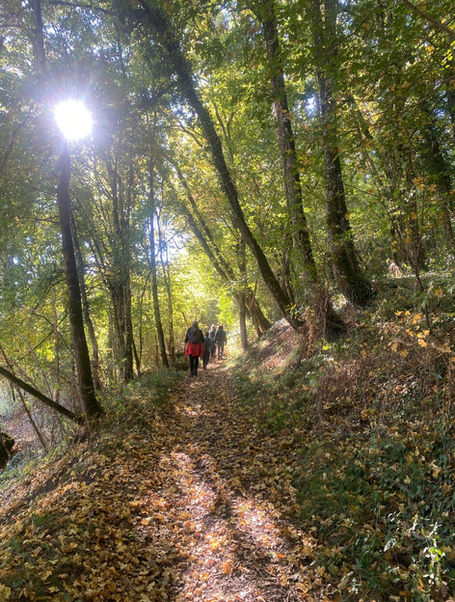
Combining hiking and fasting invites the body and mind to journey together. A gentle, comprehensive, and accessible activity, walking deeply stimulates the body's natural detoxification mechanisms already in place. through fasting.
Hiking stimulates the emunctories: the body's exit doors
The movement of the body activates the organs responsible for elimination: the emunctories.
These are the natural filters that allow waste to be evacuated: the intestines, the lungs and the skin.
-
Lungs: The gentle effort of walking deepens breathing. Air enters with greater amplitude, allowing for better elimination of gaseous waste and optimal oxygenation—essential for fat mobilization.
-
The intestines: Pelvic movements and breathing, via the diaphragm and abdominal muscles, create a natural and stimulating massage for the digestive organs. Even when fasting, the system remains active and supported.
-
Skin: By sweating, it expels toxins. This sweating naturally encourages you to drink more, thus promoting drainage through the lymphatic system.


Contrary to popular belief, properly conducted fasting does not cause muscle loss.
The study conducted by the Buchinger Clinic showed that leg muscles strengthen during fasting, while the rest of the body maintains its tone.
With 2 to 3 hours of walking per day, the muscles are used in a fair and regular manner.
This gentle effort also helps to improve sleep, which is sometimes disturbed during the first days of fasting.
Muscle metabolism is protected and boosted
Hiking also nourishes the mind
Walking in nature is reconnecting with something greater than yourself.
The landscapes soothe, inspire, and awaken wonder. Hiking becomes a moment of active contemplation, a healing experience for the soul.
The benefits are now being measured: according to a study published in Science Direct (May 2018), walking in a natural environment reduces stress, strengthens self-esteem and stimulates creativity.
Hiking feels good.
Fasting too.
Together, these two practices strengthen, balance and deeply transform each other.
We also practice Forest Bathing, known in Japan as Shinrin-yoku (森林浴), which literally means “immersing oneself in the atmosphere of the forest.” It is a slow, silent, mindful walk where the body and the senses are invited to connect with the natural environment—light, scents, textures, sounds, and the movement of the air.
Studies conducted by Qing Li (Tokyo, Nippon Medical School) and several university teams have shown that forest bathing can:
-
reduce cortisol (the stress hormone)
-
lower blood pressure
-
slow heart rate
-
improve heart rate variability (a sign of better nervous system balance)
-
increase activity of the parasympathetic nervous system (rest and regeneration)
-
stimulate immunity, particularly the activity of NK cells (natural killer cells that support immune defense)
Trees—especially conifers—release phytoncides (natural aromatic compounds) that have relaxing and immunomodulatory effects.